
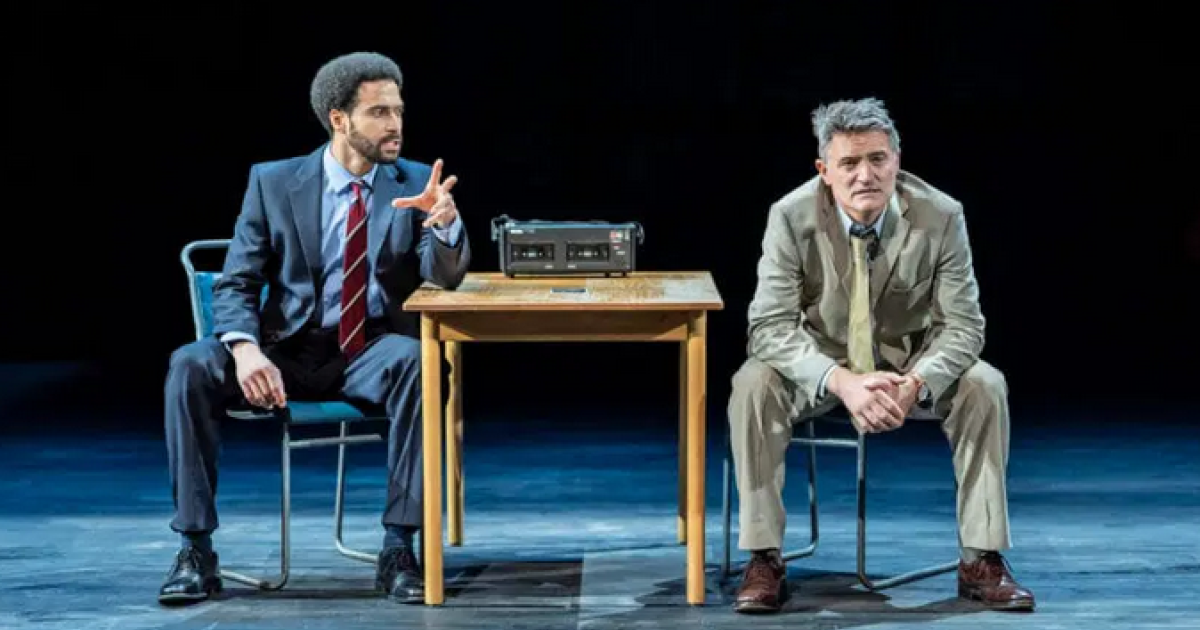
It's a quarter of a century since the final episode of the iconic ITV series (1987–2000) starring John Thaw as Detective Inspector Morse and Kevin Whately as Sergeant Lewis. A renowned dramatist, the late Alma Cullen wrote several of the TV scripts and also this original stage play, Inspector Morse – House of Ghosts.
The theatrical premise is irresistible. The curtain rises during a performance of Hamlet, ..as the eponymous hero proclaims, ’To sleep, perchance to dream .. for in that sleep of death what dreams may come.’ But then a young actress hesitates mid-speech and collapses in a pool of blood, illusion dissolving into reality as the house lights snap on. The sudden death is effectively staged and genuinely shocking.
Fortunately, in the audience is Inspector Morse who steps onto the stage, taking command and closing down the crime scene, the production cancelled. The setting is 1987 and several actors in the ‘Hamlet’ cast and production team were students with Morse at Oxford in the early 60s, which complicates matters considerably. The ingenious, atmospheric design peels back the proscenium arch to the back wall, exposing scenery, props, dressing rooms, Stage Door and wings looming in dark shadows.
With fairly elaborate scene changes, (wheeling desks, chairs and sofas on and off), the narrative is dramatised across short, filmic episodes, from the Theatre to the Police station and the Pub.
Tom Chambers approaches the legendary role with evident respect for Thaw’s original interpretation of the classics-educated, opera-loving detective, echoing vocal cadences and gestures; the sharp, flinty irascibility is softened, but the intellectual precision remains. Through his quiet composure, we glimpse a sense of inner disquiet - an abandoned academic career, unresolved affections – which weave in and out of the storyline.
Authentic to the Morse universe, the tone, the moral unease, the undercurrent of regret - all are present. Batting off grammatical corrections from his boss, Tachia Newall offers steadiness and clarity as Lewis, grounding the close partnership in something contemporary and credible.
Thematically, the play lingers on legacy — professional and personal. The “ghosts” are not spectral but psychological, from Morse's emotionally-bruised past. Across several tête-à-tête scenes with her former fellow student, Teresa Banham brings warmth and compassion to the role of Ellen. Shifting back to rehearsals for ‘Hamlet’, we observe Lawrence, the domineering, womanising director, and cast of actors, now fragile and fractured under police scrutiny.
Throughout, the seamless soundtrack flows from melodic Schubert to the Morse Code rhythm of Barrington Pheloung TV theme tune and choral snippets from Mozart and Wagner, all enhancing the dramatic mood.
The power dynamic between Detective and Sergeant is portrayed well through private discussion and debate over a pint at the Crown, their exchanges measured and absorbing. But with all talk and little tension, the weakness lies in the mechanics of the convoluted plot and the final resolution, while coherent, is confusing and rushed lacking the thrilling, unexpected denouement.
Acknowledging the formidable legacy of the television series, Morse- House of Ghosts is a production divided between affectionate homage and tentative reinvention. It stops short of the incisive complexity that distinguished Morse from lesser TV sleuths - the mind is present, the melancholy lingers, the mastery feels just out of reach.
As a fresh portrait, the play seeks to explore the man behind the method, allowing his vulnerability to share space with his cerebral, crossword-puzzling, deduction. This is not merely a welcome return of a familiar, fictional detective, but a thoughtful meditation on his past life and loves, which continue to haunt his dreams.
Showtimes:
Tuesday 3 – Saturday 7 March 2026
Daily at 7.30 pm; Matinees Thurs, Sat at 2.30 pm
Tickets: from £23.50
https://www.capitaltheatres.com/shows/inspector-morse-house-of-ghosts/